It started the way most things at Gold's Honey start — slightly behind schedule and entirely on purpose.
The call came Friday morning. Three pounds of Carniolan package bees from Ohio Honey Bees waiting at the Acton post office. Outside it was 48°F and climbing. I had not cleaned the old hives. I had not prepped the feeder. The spray bottle I'd mixed syrup into didn't work.
Some seasons just begin that way.
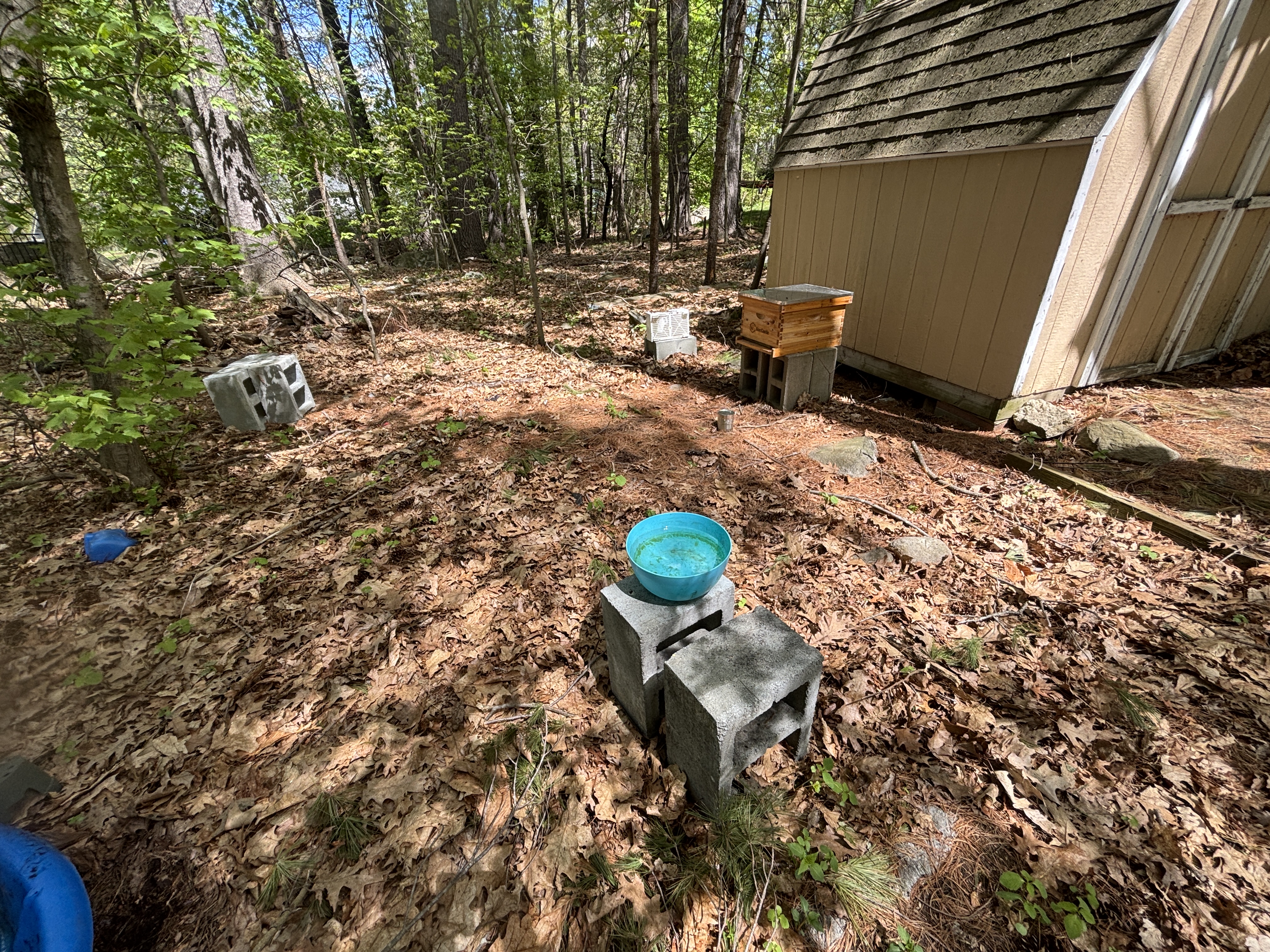 The apiary behind the shed. Water bowl on the left. The hive has been waiting.
I've been keeping bees on this property for four seasons. Three colonies have lived and died here — all gone for reasons I'm still working to understand. This year felt different. Carniolan genetics, fresh black foundation, and a front yard wildflower lawn in full bloom the week of install. The conditions were right.
The Site
The apiary sits behind the shed on the south end of the property — cinder block stand, dappled morning light, wind break from the structure. A blue bowl of water on its own cinder block pedestal sits about fifteen feet out. The water station has been there for years. The bees always find it.
Before I left for the post office I set the brood box up — single deep, fresh foundation, four center frames pulled to make room for the shake. That's the cavity the bees fall into when you invert the package. You need it ready before you pick them up.
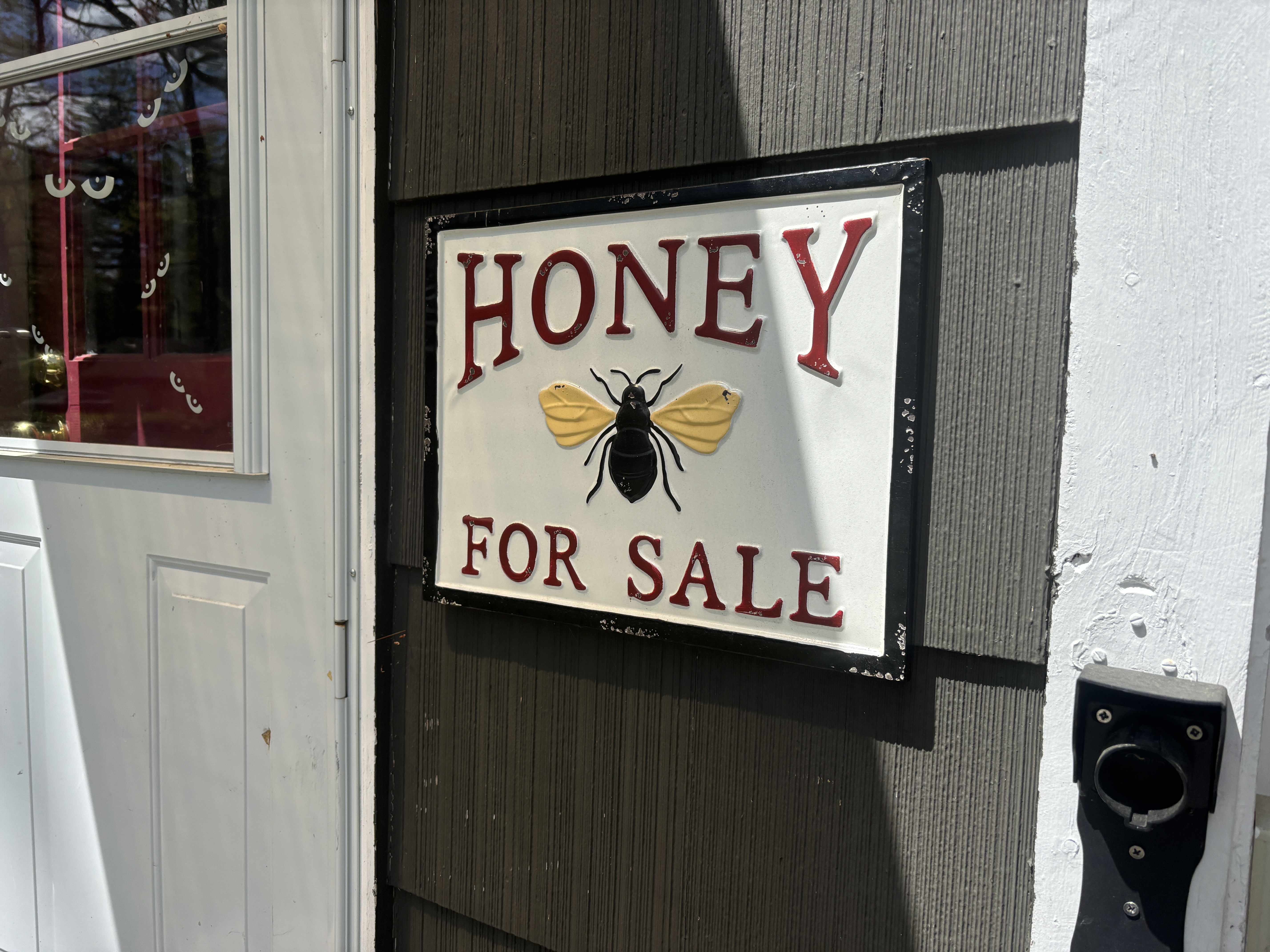 This sign has been on the property longer than any of the colonies. This season we're trying to keep it honest.
Suiting Up
Four seasons in, the ritual is familiar. Bee suit over the Bruins hoodie — both patches earned. Smoker loaded with pine needles from the yard. Gloves on last.
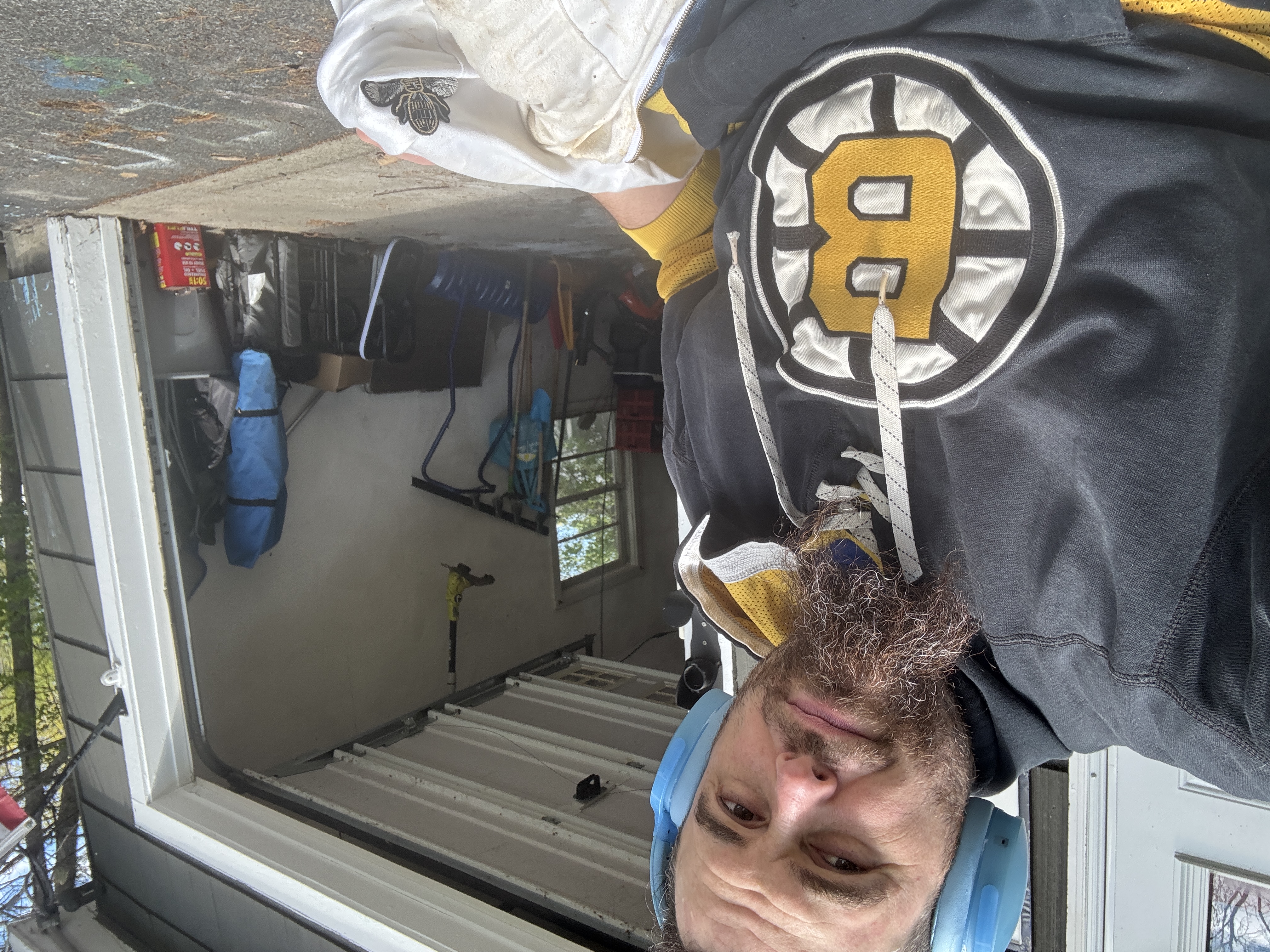 The suit has a catfish patch and a Bruins patch. The bees don't care either way.
The spray bottle failed me — the cluster was too dense to penetrate. I put it down and picked up the smoker instead. Smoke worked, same as it always does.
The Package
The OHB plastic package is a different form factor than the traditional wooden box. Large circular opening, queen cage suspended inside on a bracket, syrup can in the hole. The bees clustered thick around the queen even in transit.
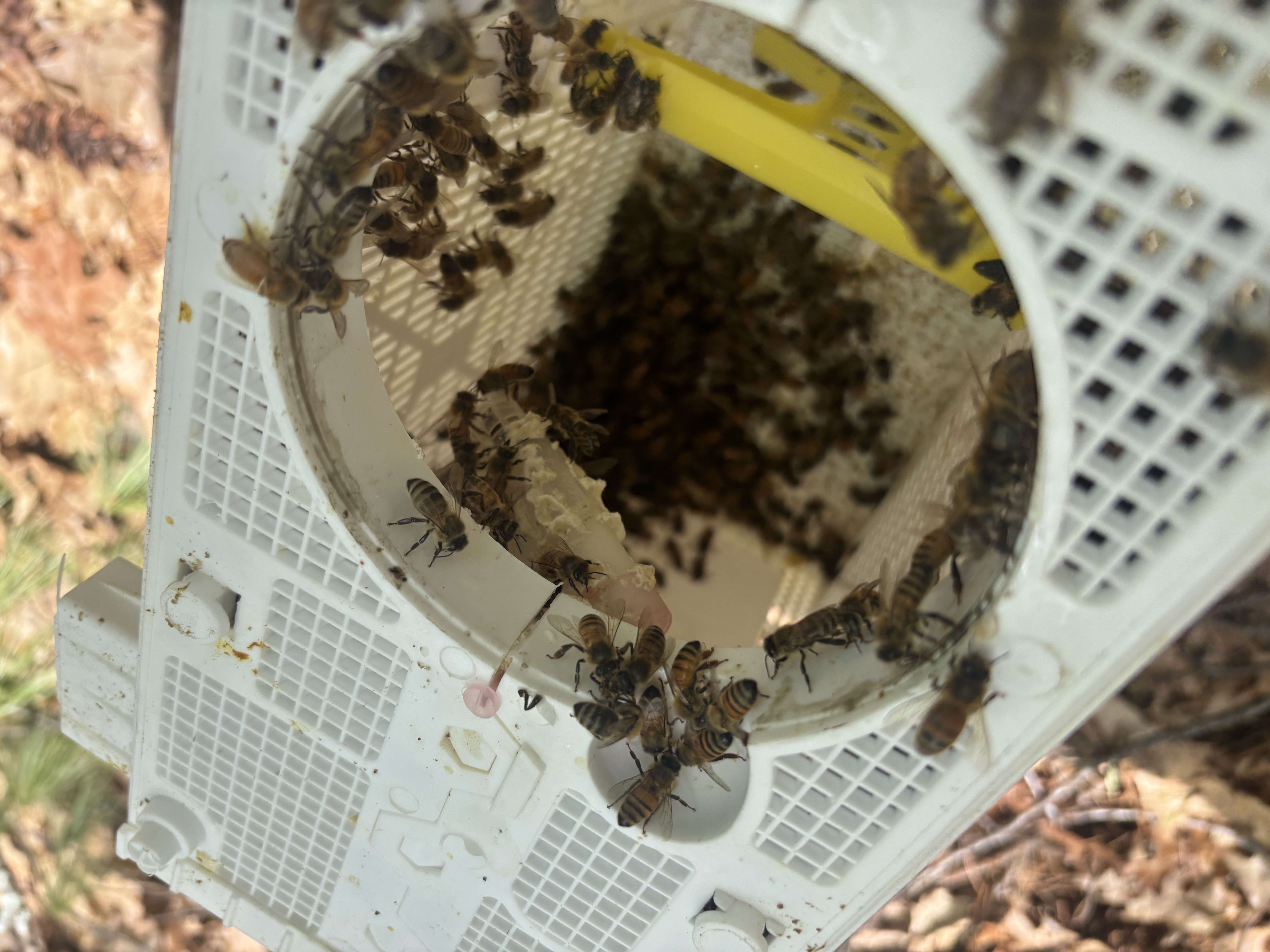 About 10,000 bees in a box, disoriented and hungry. Your job is to give them a home fast.
Good cluster density at pickup is a positive sign — it means the colony shipped well and held together in transit. Bees that have spread thin or piled at the screen are stressed.
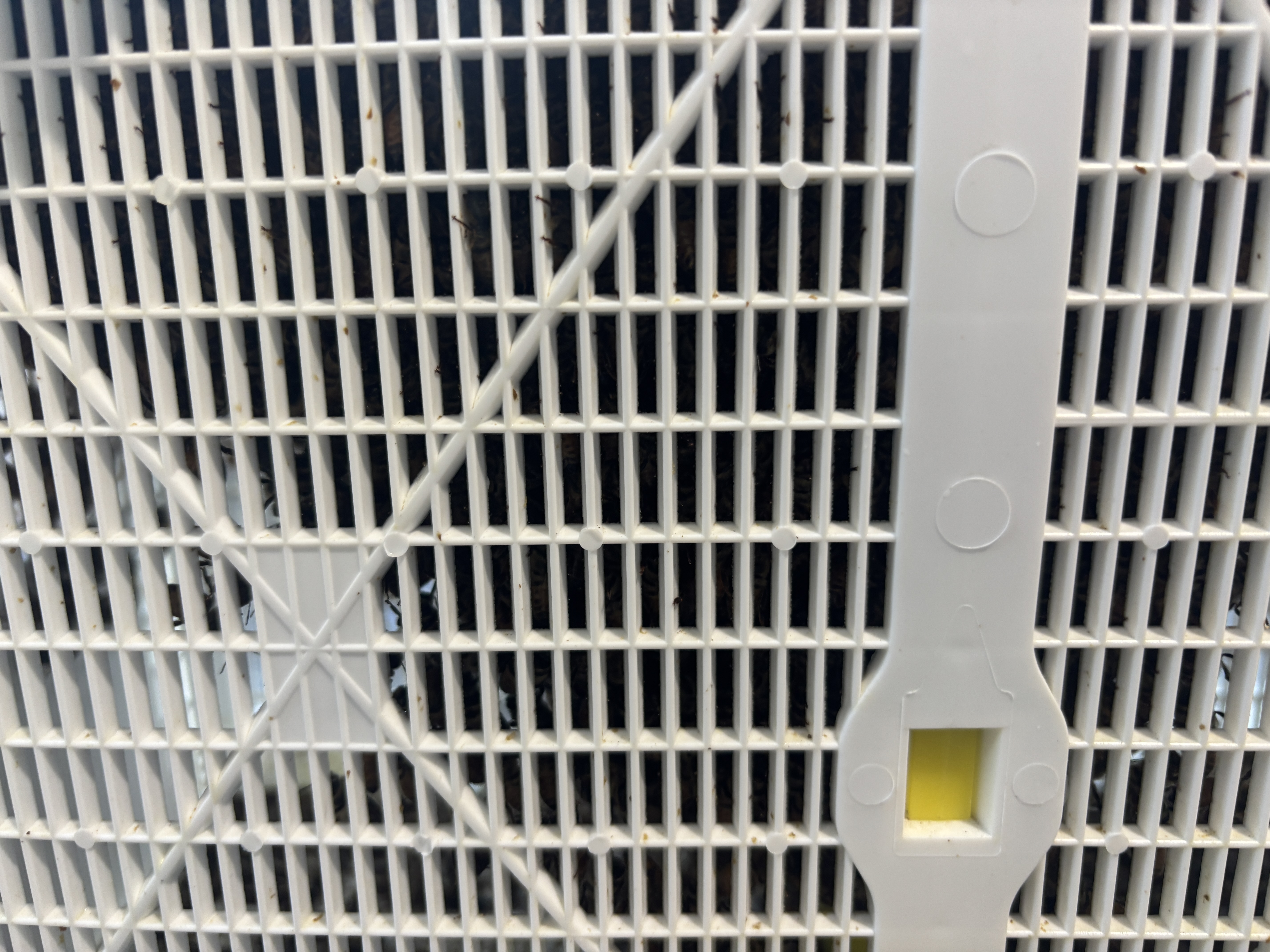 The queen cage is the small capsule visible near the opening. Everything else is workers.
The Queen
I pulled the queen cage first. OHB's plastic tube design has two ends: a pink cork on one side — the manual release, leave it alone — and a candy plug on the other. The bees eat through the candy plug over three to five days. By the time they reach her, her pheromones have circulated through the cluster long enough that they accept her as their own.
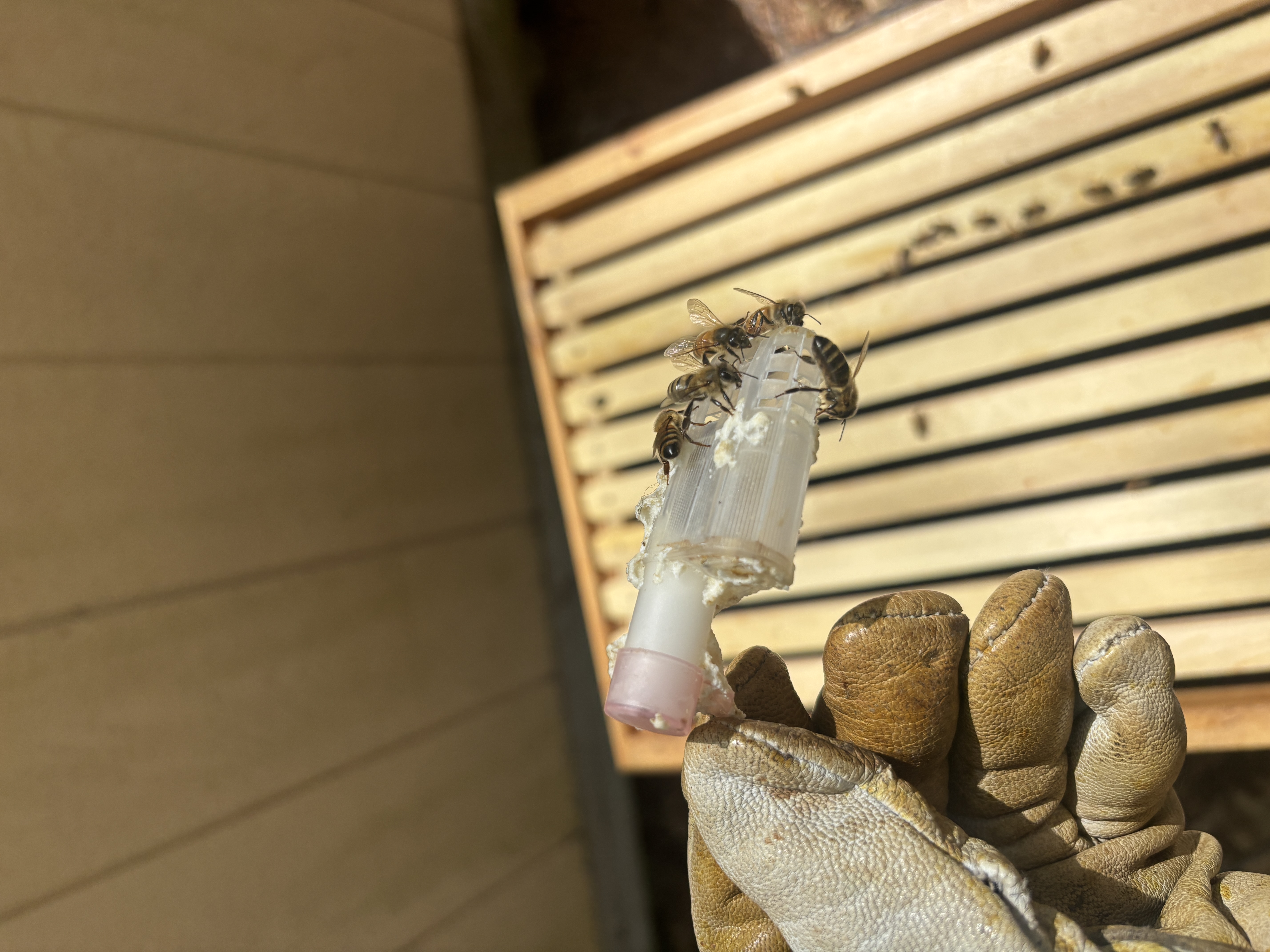 The candy plug is the mechanism. The bees eat through it slowly. That delay is the acceptance window.
The cork stays in. The candy does the work.
The Install
A few puffs of smoke across the top of the package. A sharp invert over the open cavity in the brood box. One firm drop.
About 10,000 bees fell in. The rest found their way to the entrance on their own by nightfall.
Queen cage between two center frames, screen facing in. Frames back in slowly — there are bees on the bottom board and you don't want to crush them. Lid on. Walk away.
What Comes Next
I won't open the hive for five to seven days. The temptation is real — you want to check, to confirm, to see. But every time you break that propolis seal in the first week you reset the pheromone environment and stress a colony doing critical invisible work. The candy plug releases the queen. The cluster accepts her. Comb drawing begins. All of it happens in the dark, undisturbed.
The first check is a single question: is the cage empty? If yes, look for eggs. Eggs mean she's been laying for at least three days. If you find eggs, close it back up and give them another week.
The wildflower lawn is already blooming. The water bowl is full. The entrance reducer is on the smallest slot.
The season has started.
Gold's Honey is a small-batch wildflower honey produced in Acton, MA. The apiary log documents the hive season in real time — inspections, observations, and the occasional mistake.