The Seed is intelligence sovereignty you can hold in your hands.
I'm not scared of AI. I'm scared of what people do with concentrated power, and that's an old fear. What's new is the partnership. For the first time we can think alongside something that helps us design, simulate, and test whole systems, and trace the butterfly effects before we commit to them. That's exciting and a little scary, and it should be.
So I'm building it locally, owned by the people who use it, and aimed at engineering a sustainable future. It's an engineering problem and an ethics problem at the same time, and we finally have to talk about both out loud.
One seed. Everything here grows from it.
The Seed is where all of this is headed: a small aquaponic pod that grows food, with an intelligence inside it that learns the system alongside whoever tends it — the fish, the water, the plants — and knows how to teach it back.
It's a machine as much as a garden. CNC and automation do the tending, so a pod can be built small and repeated as many times as it's needed. And it's built to be worked beside: the pod shows you what it's doing while you're doing it, so the person learns the system as the system learns them.
Something a household, a classroom, or a small community could run and understand for themselves. It's still a concept. The bees, the growing, and the research are how we're learning to build it.
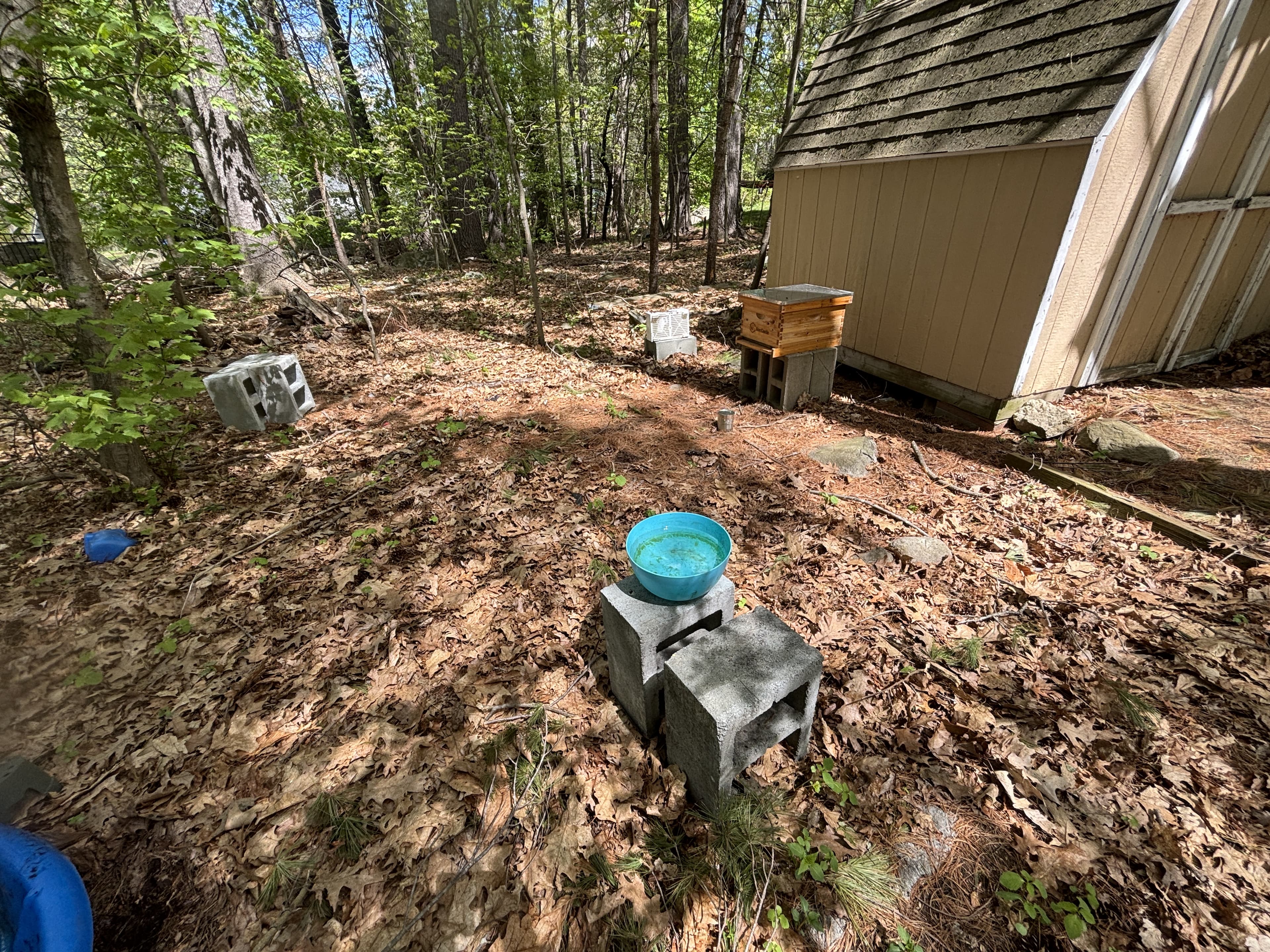
The oldest partnership in the yard.
Long before anyone worried about AI, bees and flowering plants worked out a partnership. Neither one is in charge. Each depends on the other, and the meadows and orchards that come out of it are something neither could make alone. It's one of evolution's masterpieces, and it's running behind the shed.
That's why the bees come first. A colony makes decisions no single bee makes, reads its landscape, and takes from it in a way that leaves it better off. If we want intelligence that stewards a living system instead of draining it, this is the best teacher we have.
Read the field notesThe Bees
The flagship. A colony already knows things no single bee does — the apiary is where we learn how. Field notes from the yard, in season.
Read the field notesThe Growing
Aquaponics, a robot farmer, and the botanicals we grow for the kitchen — the living systems the bees talked us into.
See what’s growingThe Research
How a hive becomes a model for local reasoning — systems that understand their own domain without giving the data away.
Explore the researchA Carniolan package installed in May, four seasons into keeping bees here.
A 30-gallon loop of goldfish and parsley while the sensors get built.
The instrumented 120+ gallon aquaponics build moves into the garage.
The door's open.
There's no partner program here with tiers and a form. There's a working apiary, a growing loop, a research thread, and a clear idea of where it's all headed. If any of that overlaps with what you do, write — a short note is plenty.
Start a conversationClassrooms & educators
A growing loop is a course in itself — biology, water chemistry, statistics from real data. If you teach and want a living system in the room, let’s talk.
Growers & beekeepers
Farms, apiaries, community gardens. People who already know their system better than any sensor does, and are curious what it would say if it could.
Researchers
Local reasoning, living-systems data, small models close to the signal. Open to collaborating on the questions, the methods, or the funding.
Builders & engineers
CNC, mechatronics, water systems, interfaces people actually learn from. The Seed is a physical thing too, and it won’t get built by one person in a garage.